
The Ultimate Guide to Amazon API Scraping in 2026
Amazon API scraping combines the directness of an official API with the flexibility of web scraping — giving you access to competitor strategies, real-time pricing, and consumer demand signals at scale. It's what separates the brands that guess from the brands that know.
This guide covers the full spectrum: the official Product Advertising API and its limits, the power of web scraping for deep market intelligence, how to handle Amazon's anti-bot systems, what data actually matters, and a no-code workflow that gets you from zero to a clean spreadsheet in under five minutes.
Scrape Amazon Product Data Without Writing Code
Clura's AI browser agent extracts product names, prices, ratings, ASINs, and more from any Amazon page. Export to CSV with one click.
Add to Chrome — Free →Unlocking Amazon Data the Modern Way
Amazon is a living database of market trends and consumer demand — scraping it systematically turns mountains of public information into a strategic playbook for pricing, product research, and competitive intelligence.
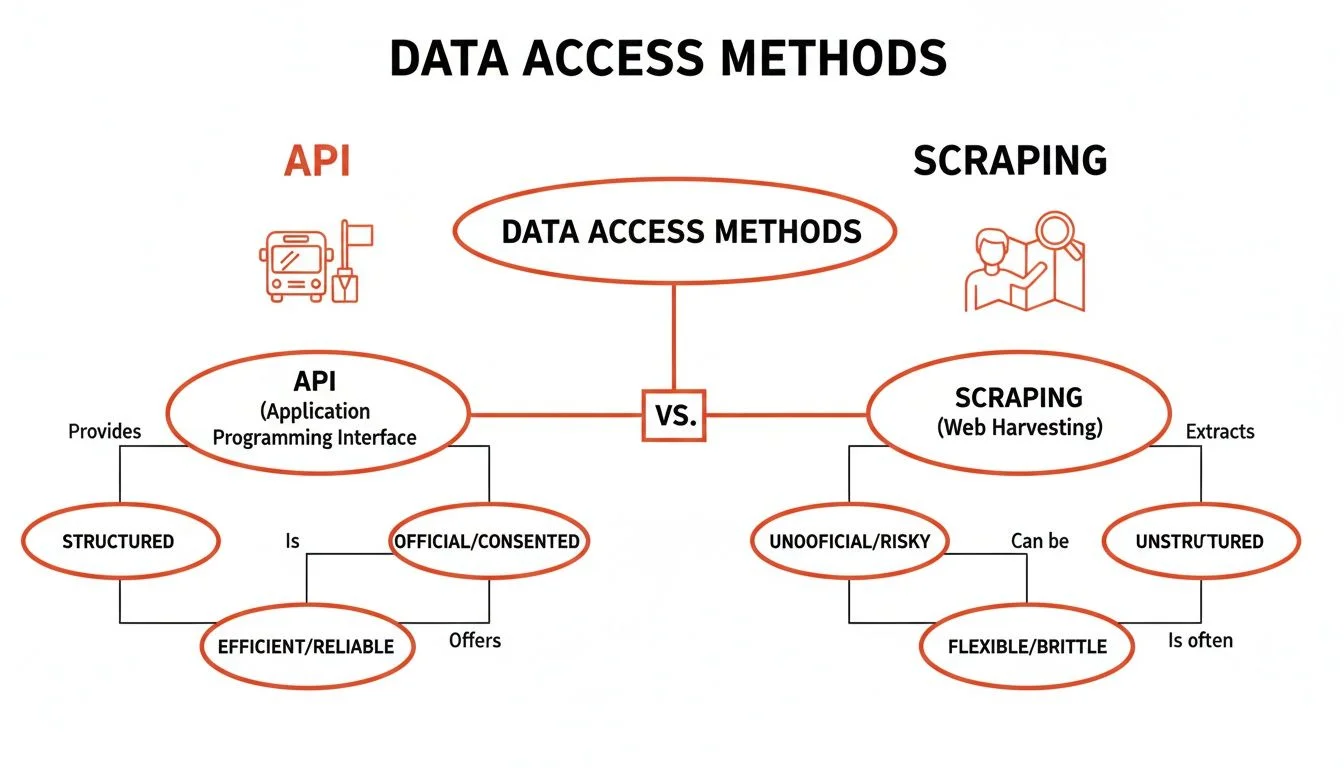
You have two main routes to Amazon data: the official Product Advertising API (PA-API), which is a structured, guided tour with strict limits, or web scraping, which gives you freedom to collect any public data on the platform. The real advantage comes from understanding both — and knowing when to use each. To get deeper context on product data organization, see our guide on ecommerce product catalog management.
- Spy on your competition: Keep a constant watch on rivals' prices, flash sales, and every new product they launch.
- Perfect your pricing: Use real-time data to build dynamic pricing strategies that maximize sales and margins.
- Spot the next big thing: Analyze Best Seller Ranks and customer reviews to find rising products before competitors do.
- Supercharge your listings: Scrape top-ranking product pages to find the exact keywords that drive visibility and conversions.
Amazon APIs vs. Web Scraping: Which Is Right for You?
Amazon's Product Advertising API provides clean, official data with strict rate limits and limited scope — ideal for affiliate tasks. Web scraping accesses any public page in real-time, making it the right choice for competitive analysis and market research.
| Feature | Amazon PA-API | Web Scraping (e.g., Clura) |
|---|---|---|
| Data Source | Official, curated feed from Amazon | Live public HTML of any Amazon page |
| Data Scope | Basic product info, pricing, ratings | Anything visible on the page (all sellers, stock, Q&A, etc.) |
| Data Freshness | Updated periodically; may not be real-time | 100% real-time, captured at moment of request |
| Rate Limits | Very strict; can be easily exceeded | Highly flexible; scales to millions of pages per day |
| Primary Use Case | Affiliate marketing, simple product displays | Competitive analysis, market research, price monitoring |
| Legality | Governed by Amazon's Terms of Service | Legal for public data; must be done ethically |
The Official Route: The Product Advertising API
Amazon's PA-API was built for affiliate partners — giving developers a way to advertise Amazon products by pulling key data points to feature on their own sites. It provides basic product details, current pricing, overall star ratings, and category browse nodes. The limits are real: strict rate limits dictate how often you can request data, and the data itself is a tiny, sanitized fraction of what's on the live product page. For serious competitive analysis, these constraints make it a non-starter.
The Explorer's Path: Web Scraping
Web scraping gives you the freedom the API cannot match. A scraper acts like a real user — visiting the public Amazon page and pulling information straight from the HTML. The golden rule: if you can see it in your browser, you can scrape it. This unlocks real-time price changes, all sellers on a listing (not just the Buy Box winner), live stock levels, full customer review text, and 'Frequently Bought Together' cross-sell intel. For a full breakdown of the legal boundaries, see our guide on whether scraping websites is illegal.
The choice boils down to control and depth. The API is for playing in Amazon's sandbox. Scraping is for understanding the entire playground.
Why Is Amazon So Hard to Scrape? (And How to Win)
Amazon detects bots through IP blocking, CAPTCHAs, and browser fingerprinting. Rotating residential proxies and headless browsers neutralize all three — or an AI-powered platform like Clura handles them automatically.
Amazon's number one job is to distinguish between a real person clicking 'Add to Cart' and a script grabbing thousands of prices. The moment your scraper gets flagged, it's blocked. Here are the primary defenses:
- IP Blocking: Hundreds of requests from a single IP in a few minutes triggers an instant blacklist.
- CAPTCHAs: Automated puzzles designed to stop scripts in their tracks — a basic scraper hits one and stalls.
- Browser Fingerprinting: Websites analyze your browser version, screen resolution, and fonts to create a unique 'fingerprint.' A robotic fingerprint triggers a block.
Your Toolkit for Flawless Data Collection
- Rotating Residential Proxies: A proxy service masks your IP, and a rotating residential proxy cycles through a pool of real IP addresses from actual homes — making requests look like they come from thousands of different shoppers.
- Headless Browsers: A real web browser (like Chrome) that runs invisibly, executing all JavaScript so you capture every piece of dynamically loaded data including prices and stock status.
Clura handles all of this automatically — proxy management, CAPTCHA solving, and headless rendering — so you can focus on getting the data rather than the technical overhead of avoiding blocks.
What Data Should You Scrape from Amazon?
The most valuable Amazon data falls into three categories: competitor intelligence (seller info, stock levels, pricing), product research (BSR, ASINs, listing copy), and pricing data (Buy Box winner, deal status, shipping costs).
For Crushing the Competition
- Seller Information: FBA vs. FBM status is crucial for understanding who has the upper hand in the fight for the Buy Box.
- Stock Levels: Knowing when a competitor's inventory is shaky is a golden opportunity to capture their sales.
- Pricing and Shipping: Monitoring price changes and shipping fees reveals how competitors react to market pressure — the foundation for dynamic pricing.
- Review Count and Velocity: A sudden spike in new reviews signals a new marketing push or updated product that's resonating with customers.
For Uncovering Winning Products and Market Gaps
Collecting ASIN-level data gives you a granular view of any product's performance history — track BSR over time to see if a product is a rising star or a fading fad.
- Best Seller Rank (BSR): A consistently low BSR signals massive, stable demand. Watching BSR over time separates rising stars from fading trends.
- Product Descriptions and Bullets: Scraping top-selling listing copy gives you a free keyword roadmap for your own listing optimization.
- ASIN and Category: The ASIN is a product's unique fingerprint. Paired with category data, it lets you map out the competitive landscape with precision.
- 'Customers Also Bought' Section: Reveals what other products your customers are buying — perfect for product bundles, cross-promotions, and future product ideas.
For Mastering Pricing and Winning the Buy Box
- List Price and Sale Price: Track both to know when competitors are running Lightning Deals or Deal of the Day promotions.
- Buy Box Winner: Who has the Buy Box right now, and at what price? This single data point drives more sales than any other.
- Shipping Costs: Customers see the total price. Tracking shipping fees alongside item price is essential for accurate competitive comparison.
How to Scrape Amazon Without Writing Any Code
Clura's AI browser agent turns any Amazon page into a structured CSV in under five minutes — no Python, no proxies, no setup required.
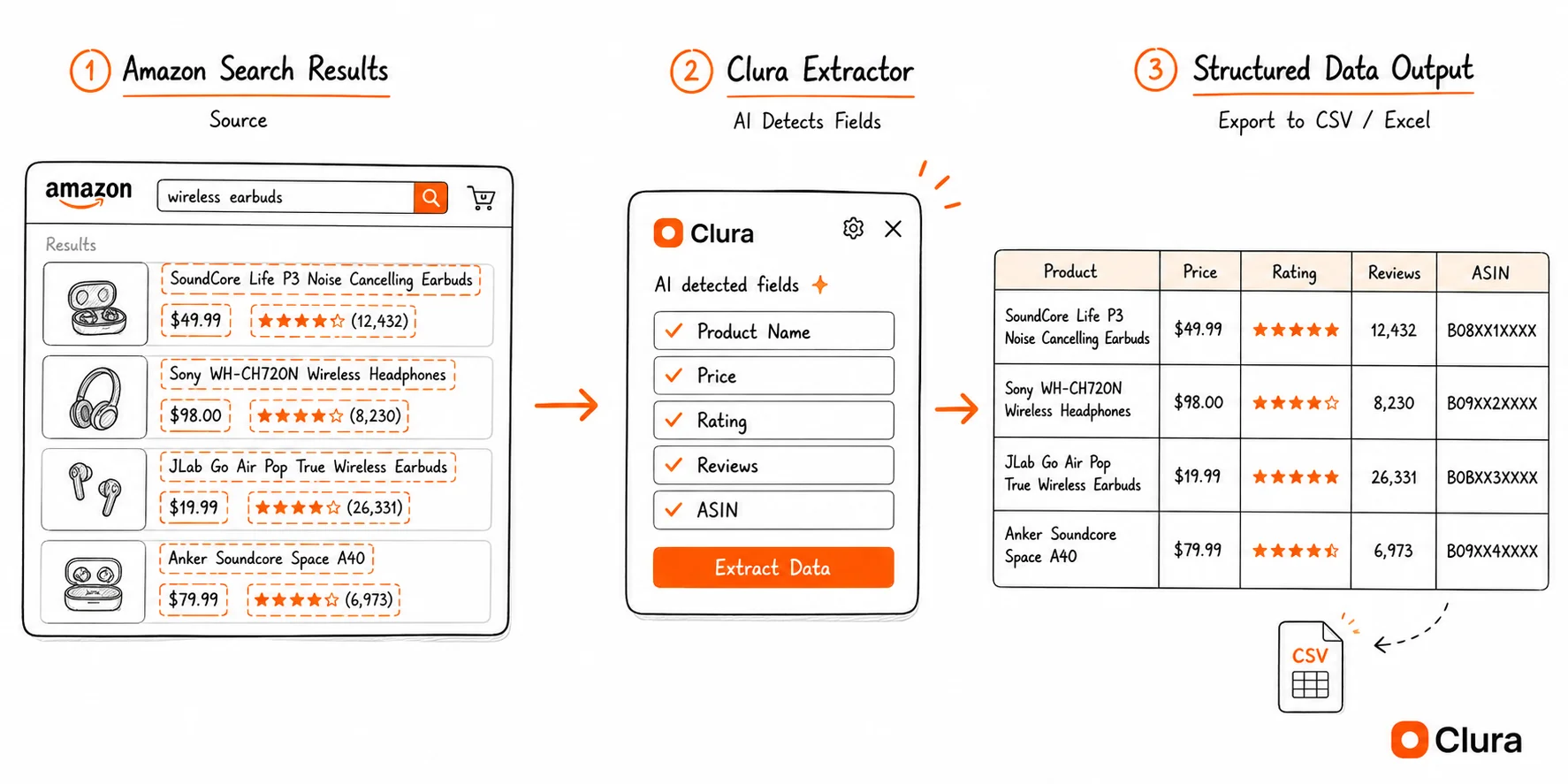
Here is the complete no-code workflow for Amazon data extraction. This integrates cleanly into a broader automated data extraction pipeline if you want to schedule recurring runs.
Use the Pre-Built Amazon Product Listings Template
Clura's Amazon Product Listings Scraper template pulls product names, prices, ratings, review counts, ASINs, and image URLs right out of the box.
Add to Chrome — Free →- Install the Clura Chrome Extension: Head to the Chrome Web Store and add Clura to your browser. One-click install.
- Go to an Amazon Page: Open any product page or search results page you want to pull data from — say, best-selling coffee makers.
- Activate the Scraper: Click the Clura icon. The AI scans the page, understands the layout, and populates a clean structured table automatically.
- Watch the Agent Work: The agent grabs product names, prices, star ratings, review counts, ASINs, and product image URLs — all at once.
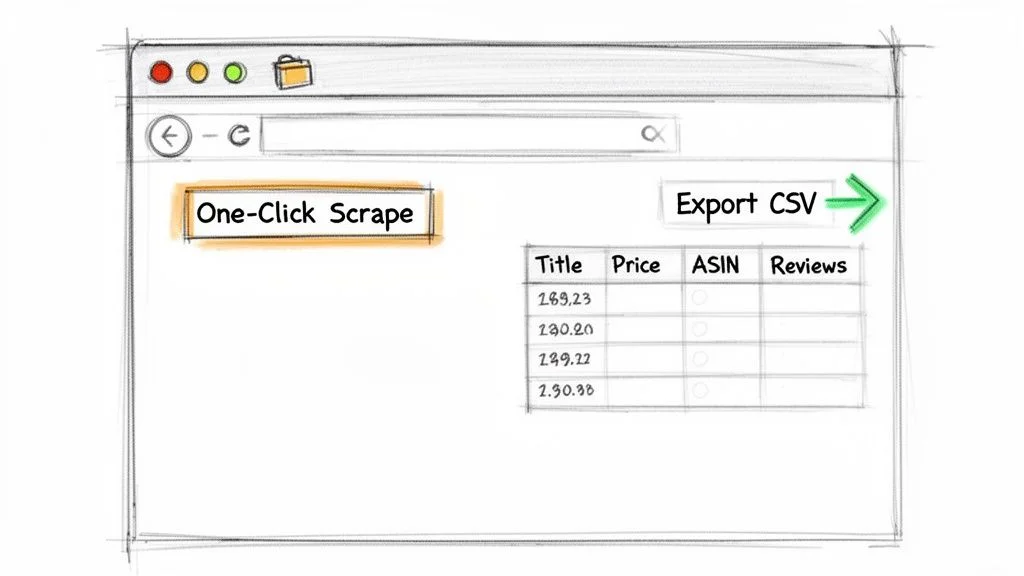
- Export with One Click: Hit 'Download CSV.' You now have a clean spreadsheet ready for Google Sheets, Excel, or any analytics tool.
With this workflow you can build a competitor watchlist by scraping your top 10 rivals' product pages in under 15 minutes, analyze a niche by pulling three pages of search results instantly, or run the same scrape weekly to track how competitors adjust pricing over time.
Turn Your Amazon Data Into Decisions
Raw Amazon data becomes competitive intelligence when organized into pricing analysis, market positioning maps, and product development signals — turning a spreadsheet into a strategic playbook.
Every row you exported is a clue — a piece of a larger puzzle showing what competitors are doing and what customers want. Here is what the data tells you:
- Pricing Analysis: Chart competitors' price changes over time to spot their strategies and find your own pricing sweet spot.
- Market Positioning: Analyze Best Seller Ranks and review counts to map your exact position in the market and see a clear path to move up.
- Product Development: Scraped 'Customers Also Bought' sections and review feedback give you a direct line into shoppers' minds — revealing gaps in the market waiting to be filled.
For Amazon price scraping specifically — automated monitoring of competitor pricing at scale — see our dedicated guide with scheduling workflows and category-level extraction patterns.
Frequently Asked Questions
Is it legal to scrape Amazon data?
Yes — scraping publicly available data is generally legal in most places, including the US and Europe. If you can see the information in your browser without logging in, it's typically fair game. The key is being a good digital citizen: don't bombard servers with aggressive request rates, don't collect personal user information, and stick to public market data like prices, titles, and ratings.
How can I scrape Amazon without getting blocked?
Getting blocked happens when your activity looks robotic. Space out requests to avoid hammering servers. Use rotating residential proxies so requests appear to come from many different real users. Handle CAPTCHAs automatically rather than letting them stall your workflow. A platform like Clura manages proxy rotation, rate limiting, and CAPTCHA solving automatically, so you can focus on the data rather than the technical gymnastics.
What's the best format for exporting Amazon data?
CSV is the go-to for instant analysis — open it in Google Sheets or Excel to sort, filter, and chart right away. JSON is the better choice if you're piping data into another application, a custom dashboard, or a database, since it's a structured format that integrates cleanly with most developer tools. CSV is for putting data in your hands; JSON is for putting it into another system.
What is the difference between Amazon PA-API and web scraping?
Amazon's Product Advertising API provides structured, official data — basic product details, pricing, and ratings — but with strict rate limits and limited scope. It was built for affiliate marketing, not deep competitive research. Web scraping accesses any public Amazon page in real-time, capturing everything visible in a browser: all sellers, live stock levels, full review text, BSR, and more. For serious market intelligence, web scraping is significantly more powerful.
Conclusion
Amazon API scraping is your roadmap to data-driven decisions on the world's largest marketplace. Whether you use the official PA-API for basic affiliate tasks or web scraping for deep competitive intelligence, the fundamentals are the same: collect the right data, handle the technical barriers, and translate raw numbers into strategic action.
The tools are ready. You've learned how to sidestep API limits, neutralize anti-bot systems, and identify the data points that actually move the needle. The only step left is putting those insights into motion.
Explore related guides:
- Amazon Scraper Guide — the no-code Chrome extension workflow — extract Amazon product data without API keys or Python
- Amazon Price Scraping — automated competitor price monitoring at category scale with scheduling workflows
- Automate Data Extraction — build recurring Amazon data workflows that run on a schedule without manual work
- What Is Competitive Intelligence — turning scraped Amazon data into a structured competitive strategy
- Ecommerce Product Catalog Management — organizing and structuring the product data you collect from Amazon
Turn Any Amazon Page Into a Clean Spreadsheet — Instantly
Clura's AI browser agent handles proxies, CAPTCHAs, and pagination automatically. Export structured Amazon data with one click and start making data-driven moves today.
Add to Chrome — Free →