
What Is Sales Intelligence? Your Guide to Selling Smarter
Sales intelligence is your secret weapon for selling smarter, not just harder. Think of it as a powerful GPS for your sales team — guiding reps directly to the right prospects with the perfect message, right when those prospects are ready to buy. The global sales intelligence market is on track to hit an incredible $9.15 billion by 2031, driven by the ability to cut prospect research time from hours to minutes by analyzing signals from over 100,000 different sources.
This guide explains exactly what sales intelligence is, breaks down its three core components, and walks you through building your first workflow from scratch. For context on how to find those first high-value prospects, see our guide on how to generate B2B leads.
Build Smarter Sales Workflows in One Click
Clura helps you collect and organize web data instantly — extract buying signals, firmographic data, and contact information from any public source without writing a line of code.
Add to Chrome — Free →The Three Pillars of Sales Intelligence
Sales intelligence stands on three pillars: finding high-potential leads that match your ICP, understanding each prospect's unique context and pain points, and knowing precisely when to reach out based on real buying signals.
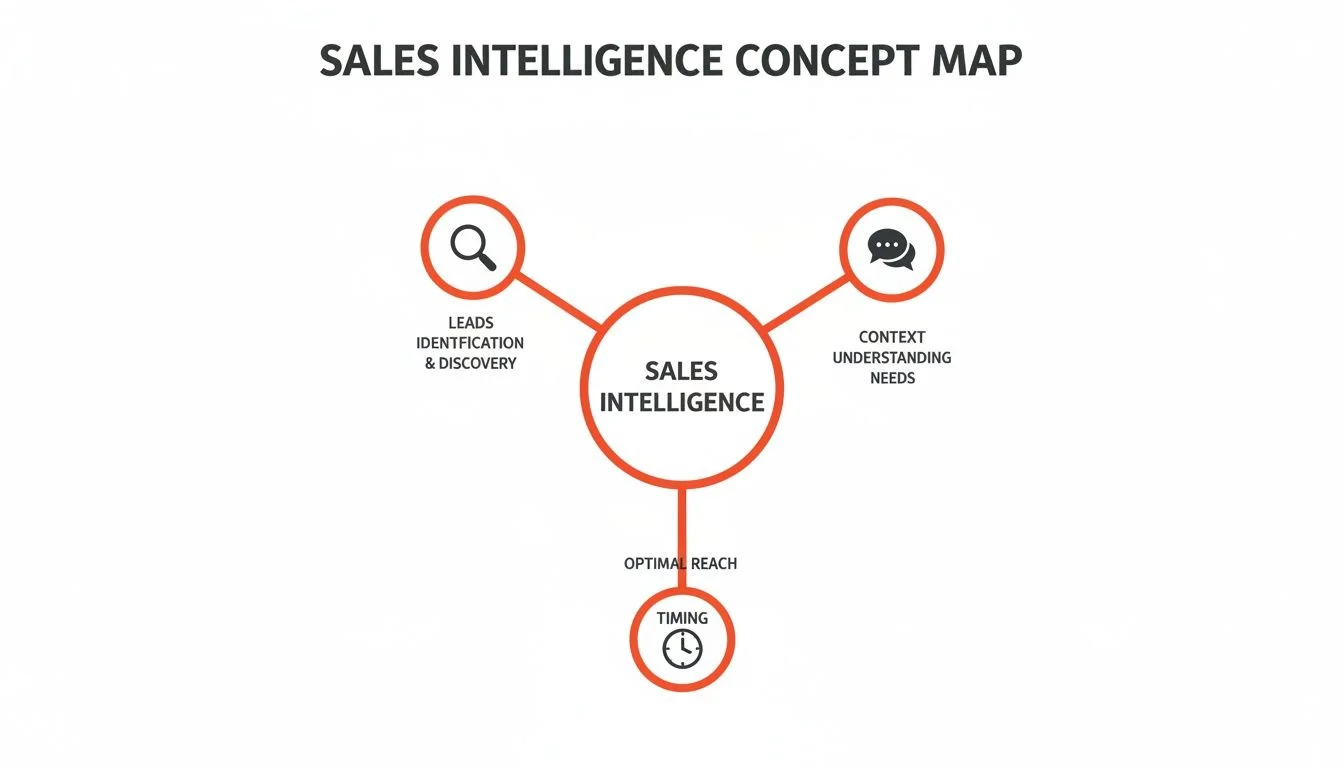
- Finding High-Potential Leads — zeroing in on best-fit companies and the key decision-makers inside them so your team's effort is always aimed at the right targets.
- Understanding Their Unique Context — insights into a prospect's challenges, goals, and recent activities that make your outreach feel personal and relevant, not robotic.
- Knowing Precisely When to Reach Out — tracking critical buying signals like funding rounds and executive hires that tell you now is the perfect moment to start a conversation.
This data-first strategy is quickly becoming essential for any modern sales organization. It is no longer a nice-to-have — it is the operational foundation of teams that consistently hit quota.
The Core Components of Sales Intelligence
Sales intelligence has three core components working in harmony: data collection from public sources, data enrichment that turns raw information into rich prospect profiles, and buying signals that tell reps exactly when to engage.
Data Collection and Aggregation
Modern sales intelligence tools act as digital detectives, constantly scouring millions of sources — company websites, press releases, social media profiles, job boards, and industry news. Sophisticated browser automation pulls structured data like employee lists from LinkedIn, funding announcements from Crunchbase, or tech-stack clues from company career pages.
Data Enrichment
Raw data on its own is not enough. Data enrichment transforms a basic name-and-company entry into a rich, three-dimensional prospect profile. Explore our full guide on what data enrichment is to understand how this engine works.
- Accurate contact information: verified emails and direct-dial phone numbers.
- Detailed firmographics: industry, company size, and annual revenue.
- Key technographics: the specific software and tools a company uses.
- Professional background: job title, responsibilities, and career history.
Buying Signals and Trigger Events
Buying signals are flags that indicate a prospect might be ready to make a move. Spotting these is the secret to reaching out at precisely the right moment.
- New executive hires — a new C-suite leader almost always signals a new budget and desire to shake things up.
- Recent funding rounds — a cash injection is a clear sign a company is ready to invest in growth.
- Company expansion — opening a new office or entering a new market means they will need scalable systems.
- Hiring sprees — suddenly posting ten new sales-rep roles signals a need for supporting technology.
- Negative competitor reviews — complaints about a rival product are a perfect opening for your solution.
The Game-Changing Benefits for Your Sales Team
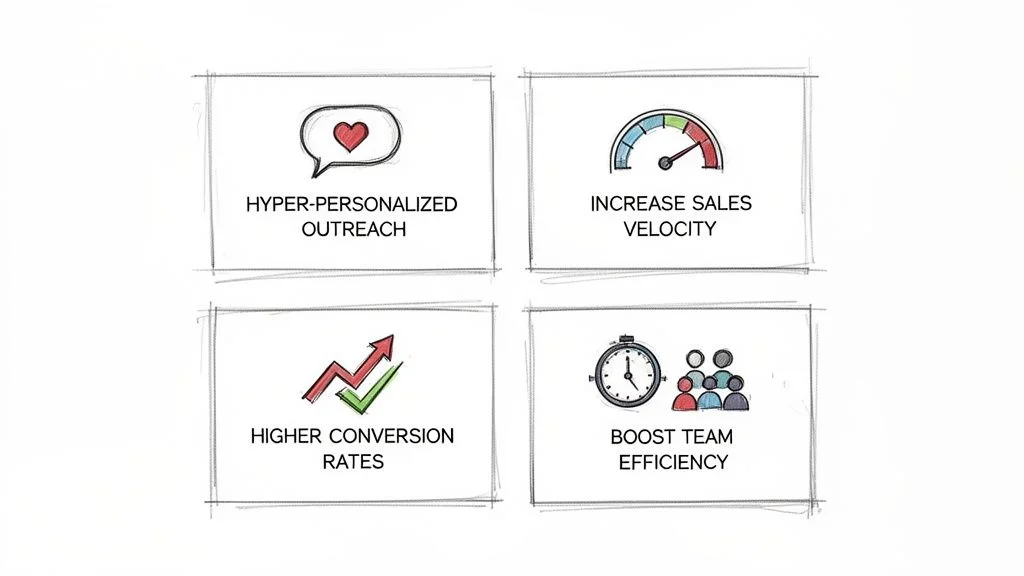
Sales intelligence delivers four measurable benefits: hyper-personalized outreach that drives replies, increased sales velocity by eliminating dead-end leads, higher conversion rates from better-qualified prospects, and massive team efficiency gains from automating research.
| Metric | Without Sales Intelligence | With Sales Intelligence |
|---|---|---|
| Lead-to-Opportunity Rate | 10-15% | 25-30% |
| Average Sales Cycle | 90-120 days | 60-75 days |
| Quota Attainment | 40-50% of reps | 70-80% of reps |
| Time Spent on Research | 6-8 hours/week | 1-2 hours/week |
When your reps are armed with deep insights into a prospect's challenges and goals, they can position your solution as the perfect answer to their specific needs — and that translates directly into higher win rates.
Turn Buying Signals Into Pipeline Automatically
Clura extracts fresh firmographic and technographic data from any public source in one click, giving your sales team the intelligence they need to personalize outreach at scale.
Add to Chrome — Free →Building Your First Sales Intelligence Workflow
A sales intelligence workflow follows four steps: define your ICP, identify your key data sources, choose a technology stack, and automate the trigger-based enrichment and routing of new leads.
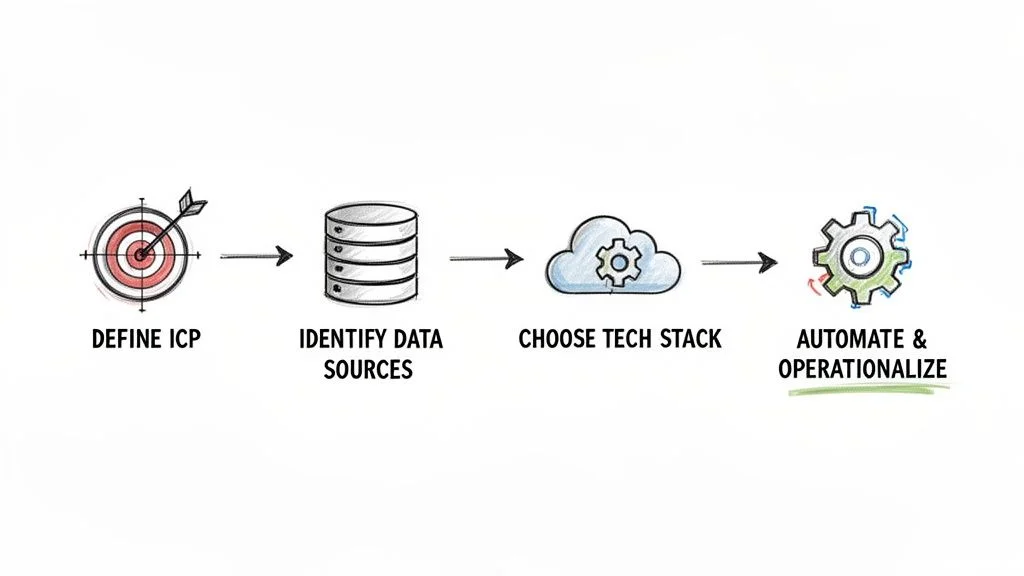
- Define Your ICP — document the industry, company size, revenue range, pain points, and tech stack of your best existing customers.
- Identify Your Key Data Sources — LinkedIn and Sales Navigator for contacts, Crunchbase for funding signals, company career pages for hiring triggers, and industry news for strategic events.
- Choose Your Tech Stack — an AI data collection tool, a CRM, and an engagement platform for outreach.
- Automate and Operationalize — build if-then triggers: if a target company posts a VP of Sales job, automatically add them to a high-priority CRM sequence.
The real magic of your tech stack is a seamless automated flow — from an online signal to a new lead in your CRM — so reps can stop prospecting and start selling.
Common Mistakes and How to Avoid Them
The three most common sales intelligence mistakes are relying on outdated data, ignoring buying signals in favor of generic outreach, and over-automating personalization until messages feel robotic.
Relying on Outdated Data
Data changes constantly. People switch jobs, companies get acquired, and phone numbers go stale. Stale data leads to bounced emails, embarrassing calls, and wasted time. The fix: prioritize continuous data hygiene and use tools that refresh information automatically.
Ignoring Critical Buying Signals
Collecting great data but failing to act on trigger events means always being a step behind. Missing a funding round or a key executive hire means sending a generic pitch when you could have kicked off a perfectly timed, personalized conversation.
Over-Automating Personalization
Automation is excellent for research, but real personalization requires a human touch. Dropping a company name token into a template is not personalization — it is lazy. Use your intelligence to craft a short, authentic message that shows you have actually done your homework.
Frequently Asked Questions
What is sales intelligence?
Sales intelligence is the process of collecting, enriching, and acting on data about prospective customers — including firmographics, technographics, contact information, and buying signals — so your sales team can reach the right people with the right message at the right time.
Is sales intelligence the same as a CRM?
No. A CRM is your team's memory — it stores relationships you have already built. Sales intelligence is your eyes and ears on the market, actively discovering new opportunities and uncovering deep insights on prospects you do not know yet. They are a powerful combination: intelligence finds the opportunities, and the CRM helps you manage them.
How can I start with sales intelligence on a tight budget?
Start with a high-quality AI data collection tool. For a fraction of what enterprise platforms cost, you can build targeted lead lists from LinkedIn, monitor buying signals from Crunchbase, and enrich new leads with firmographic data automatically. Define your ICP, pick two or three buying signals to track, and build one repeatable workflow around them.
How do I measure the ROI of sales intelligence?
Track three core metrics before and after implementation: lead conversion rate (are more prospects turning into qualified opportunities?), sales cycle length (are deals closing faster?), and time saved on prospecting (how many hours per week do reps get back?). The delta between before and after draws a direct line from your investment to revenue impact.
What are the best free sources for sales intelligence?
The richest free sources include competitor and prospect websites, LinkedIn for job titles and career moves, Crunchbase for funding events, G2 and Capterra for product reviews revealing competitor weaknesses, and Google Alerts for brand mentions. Combining these with an AI browser tool to automate collection gives you a comprehensive intelligence program at minimal cost.
Conclusion
Sales intelligence transforms how your team makes decisions — replacing guesswork with data-backed confidence. By systematically collecting public signals, enriching them into actionable prospect profiles, and acting on buying triggers at precisely the right moment, you build a proactive, data-driven sales organization.
Start small: pick your top three data sources, define five key buying signals, set up one automated monitoring workflow, and schedule a monthly review. The compounding advantage from consistent sales intelligence practice is one of the highest-ROI investments your revenue team can make.
Explore related guides:
Ready to Build a Smarter Sales Workflow?
With Clura, you can collect and organize web data in one click — extract buying signals, firmographic intel, and contact data from any public source instantly.
Add to Chrome — Free →