
How to Build a Talent Pipeline: Step-by-Step Guide
Reactive "post-and-pray" recruiting is stressful, expensive, and rarely lands the best person. Building a talent pipeline transforms recruiting from a chaotic sprint into a predictable engine for growth — giving you a ready list of pre-vetted candidates before you even have an open role.
The best candidates aren't scrolling job boards — they're already employed. By the time a role opens, your pipeline lets you know exactly who to call because you've already built trust. Research shows automation may displace 85 million jobs by 2025 while 97 million new roles emerge in AI and green energy — making a proactive talent bench more critical than ever. Our guide on Boolean search strings for recruiters can sharpen your sourcing immediately.
Automate Candidate Sourcing — Build Your Pipeline Faster
Clura's LinkedIn Profiles Scraper lets you build highly targeted candidate lists from any LinkedIn search without hours of manual copy-pasting.
Add Clura to Chrome — Free →Step 1: Define Your Ideal Candidate Profile
An Ideal Candidate Profile (ICP) goes beyond a job description — it's a three-dimensional portrait of the person who will thrive in your specific environment, mapping core competencies, performance attributes, real accomplishments, and cultural fit.
Sourcing without a sharp ICP is like searching for a needle in a haystack. Collaborate with the hiring manager and team to build a portrait that captures who the person is, not just what they'll do.
| Category | Attribute | Weighting |
|---|---|---|
| Technical Skills | Proficiency in Required Tools | 30% |
| Experience | Relevant Domain Experience | 25% |
| Soft Skills | Cross-Functional Collaboration | 25% |
| Cultural Fit | Proactive & Results-Oriented | 20% |
A great ICP doesn't just describe what the person does; it captures who they are and how they'll make the whole team better. It's the difference between hiring someone to fill a seat and hiring someone to help build your future.
Step 2: Master Proactive Sourcing Across Multiple Channels
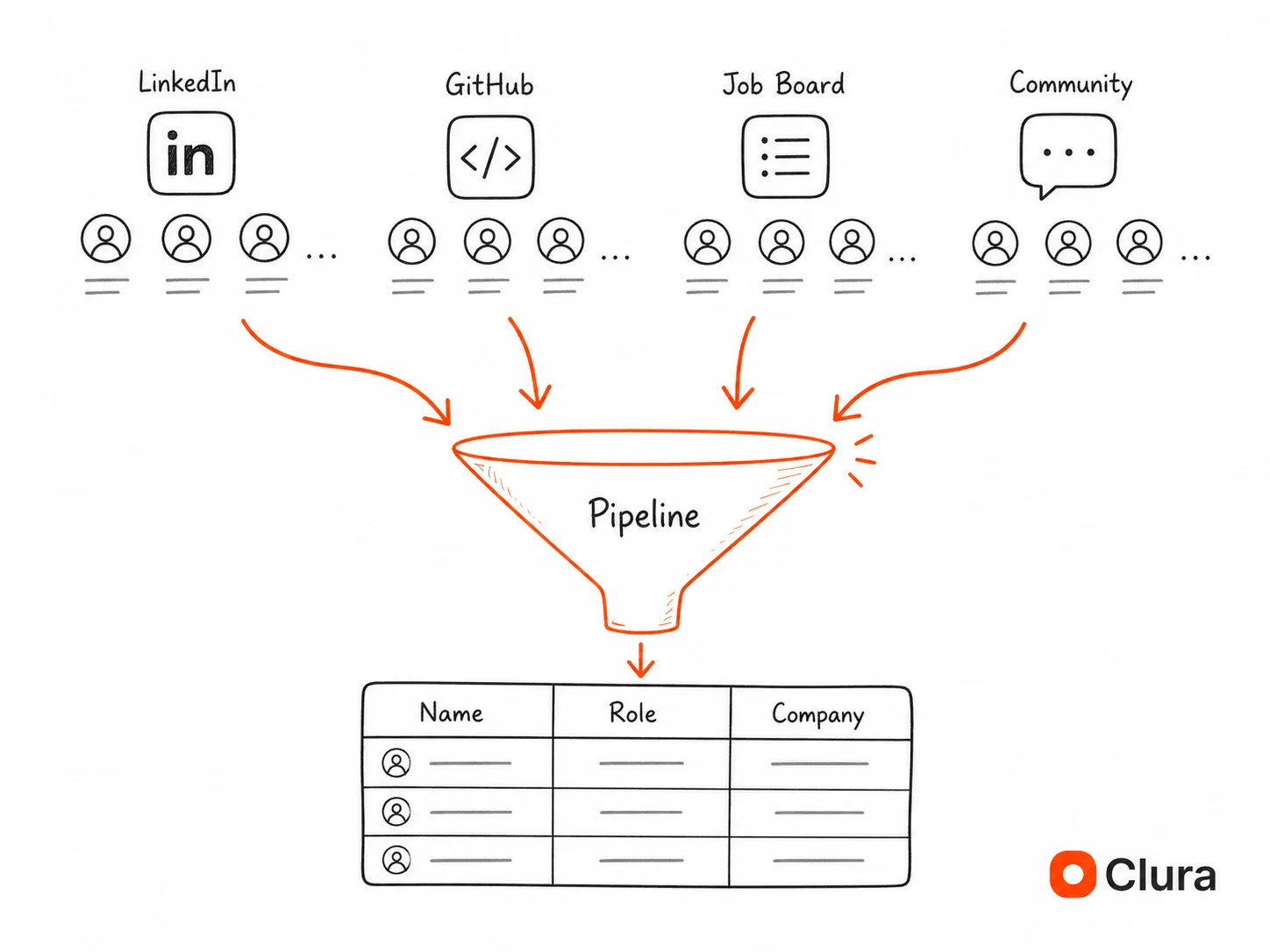
Proactive talent sourcing means going to where your ideal candidates are — GitHub for developers, Behance for creatives, niche Slack channels for domain experts — rather than waiting for them to apply.
The biggest mistake in pipeline building is posting a job and waiting. Real game-changers — passive candidates — are busy excelling in their current roles. You have to meet them where they are.
- For Tech Talent: Go to GitHub or Stack Overflow to see a developer's actual work and contributions.
- For Creative Professionals: Look on portfolio sites like Behance or Dribbble.
- For Niche Experts: Find them in industry-specific Slack channels or professional communities.
| Sourcing Channel | Best For | Typical Cost | Candidate Quality |
|---|---|---|---|
| Passive & Active | Medium to High | Varies | |
| GitHub/Stack Overflow | Passive (tech) | Low (free to browse) | High |
| Niche Job Boards | Active | Low to Medium | High for specific roles |
| Employee Referrals | Passive & Active | Low (incentive-based) | Very High |
| Industry Events/Webinars | Passive | Varies | High |
Get fluent in Boolean search to build precise queries: ("Senior Product Manager" OR "Lead PM") AND (SaaS OR B2B) AND Roadmap NOT ("Associate PM"). See our complete guide to Boolean search strings for recruiters for more examples.
Step 3: Automate Your Pipeline with the Right Tech
An ATS manages active applicants while a CRM nurtures passive candidates for future roles — together they form the core of a scalable talent pipeline, with AI-powered scraping tools automating data collection from professional networks.
Trying to build a talent pipeline manually is like filling a swimming pool with a bucket. The right technology automates the heavy lifting so you can scale.
- ATS (Applicant Tracking System): Manages active applicants for open roles, tracks interview stages, and ensures compliance.
- CRM (Candidate Relationship Management): Nurtures passive candidates who could be a perfect fit for future roles.
- AI Sourcing Tools: Scan millions of public profiles to identify individuals matching your ideal candidate profile — even those not actively looking.
Automate Candidate Data Collection
Clura's LinkedIn Profiles Scraper builds targeted candidate lists without hours of manual copy-pasting — giving you more time to build real relationships.
Add to Chrome — Free →Step 4: Nurture Your Talent Community to Keep It Warm
Candidate nurturing means staying on top candidates' radar with genuine value — industry insights, exclusive event invites, and personalized content — so they're excited to hear from you when the right role opens.
When you don't have the perfect role for a strong candidate, most companies drop their name into a spreadsheet and go cold. That's not a talent pipeline — it's a graveyard of missed opportunities.
- Quarterly Talent Newsletter: Share company news, industry insights, and career tips with your entire talent pool.
- Exclusive Event Invites: Hosting a webinar? Invite your talent community first to make them feel like insiders.
- Personalized Content: Send relevant articles with a personal note showing you're thinking of them specifically.
A simple message like, 'Hey Alex, I saw this article on the future of AI in marketing and thought of our conversation. Hope you're doing well!' is a thousand times more powerful than a generic job blast.

Step 5: Measure and Optimize Your Pipeline Performance
Track these four pipeline KPIs to identify bottlenecks: conversion rates between stages, time-in-stage, source of hire, and quality of hire measured through retention and performance reviews.
- Conversion Rates: What percentage of candidates move from one stage to the next? A big drop-off signals a problem to fix.
- Time-in-Stage: Long delays create a poor candidate experience and increase the risk of losing top talent.
- Source of Hire: Where do your best hires actually come from? This data shows where to double down.
- Quality of Hire: Are pipeline hires becoming top performers? Track through performance reviews and retention rates.
| SLA Owner | Commitment | Timeframe |
|---|---|---|
| Recruiting | Present 5–7 qualified candidates | Within 10 business days of role opening |
| Hiring Manager | Provide feedback on candidates | Within 48 hours of an interview |
Frequently Asked Questions
What is a talent pipeline and why does it matter?
A talent pipeline is a proactive pool of pre-vetted candidates who are interested in your company and aligned with your culture, built before roles open. It matters because it cuts time-to-hire from months to weeks, reduces recruiting costs, improves hire quality, and strengthens employer brand.
How long does it take to build a talent pipeline?
Building an initial pipeline takes 2–3 months of consistent effort — defining ICPs, sourcing across channels, and beginning candidate outreach. An ongoing pipeline never stops being built; it's a living asset that grows continuously with regular nurturing and new sourcing activity.
How do I source passive candidates for my pipeline?
Go where passive candidates are: GitHub and Stack Overflow for developers, Behance for creatives, LinkedIn for professionals across industries. Use Boolean search strings for precision. AI-powered tools like Clura can automate data collection from LinkedIn profiles, saving hours of manual copy-paste work.
What's the difference between an ATS and a CRM in recruiting?
An ATS (Applicant Tracking System) is for managing active applicants in your current open roles — tracking their interview stages and compliance. A CRM (Candidate Relationship Management) is for nurturing relationships with passive candidates who aren't ready to apply yet but could be perfect future hires.
How often should I contact candidates in my talent pipeline?
A quarterly check-in is a good baseline for most candidates, supplemented by personalized outreach when relevant content or news crosses your desk. The goal is to stay on their radar without being intrusive — providing value each time you reach out rather than just asking whether they're looking for work.
Conclusion
Building a talent pipeline is the single most powerful shift you can make in recruiting — turning a reactive, stressful process into a proactive competitive advantage. The five steps above give you a repeatable system: define who you're looking for, find them proactively, automate the data collection, nurture the relationship, and measure what works.
Automating candidate data collection is key to scaling your efforts. The time you save on manual sourcing is time you can invest in building the genuine human connections that make candidates excited to join your team.
Explore related guides:
- Boolean Search Strings for Recruiters — precise search commands to find the exact candidates you need
- How to Scrape Data from LinkedIn — build targeted candidate lists from LinkedIn with one click
- Best Data Extraction Software — compare top tools for automating candidate and lead data collection
Build Your Talent Pipeline Faster with Automated Data Collection
Clura scrapes, organizes, and enriches candidate data from any website in a single click — freeing you to focus on building relationships and making strategic hiring decisions.
Add to Chrome — Free →