
Competitive Intelligence Best Practices
Competitive intelligence best practices have evolved far beyond quarterly reports and manual spreadsheets. In today's fast-moving market, staying ahead means knowing precisely what your competitors are doing right now — their pricing changes, marketing campaigns, hiring signals, and customer feedback — automatically and continuously.
This guide walks through ten practical strategies that use modern automation and AI-powered web scraping to build a proactive intelligence system. Whether you run sales, marketing, or product teams, these methods will help you turn scattered web data into a powerful engine for growth.
Automate Your Competitive Intelligence with Clura
Clura's AI-powered Chrome extension lets you extract competitor pricing, product data, job postings, and reviews with a single click — no code required.
Add to Chrome — Free →1. Automated Web Data Extraction and Monitoring
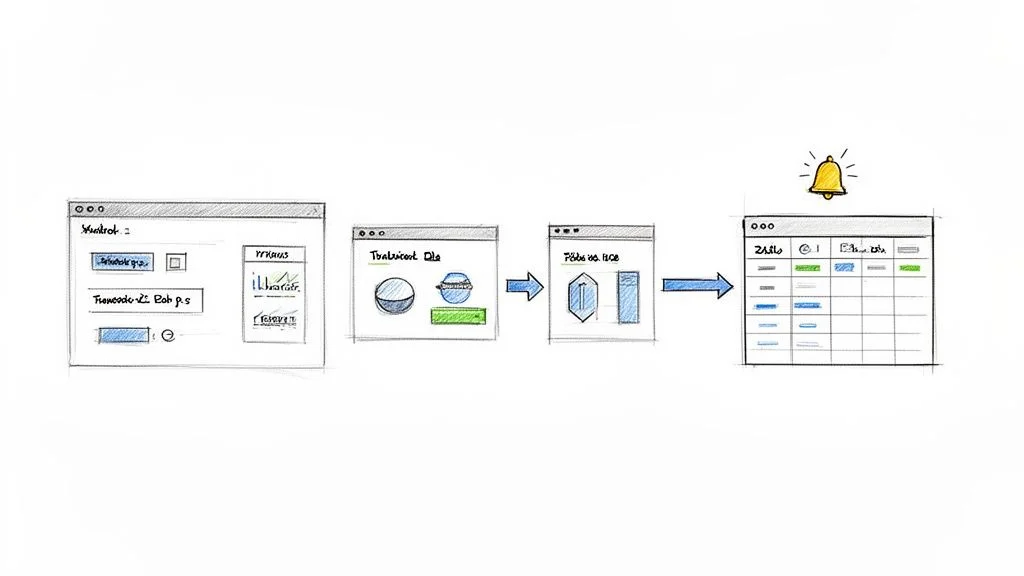
Automated web data extraction means using specialized tools to continuously collect data from competitor websites, pricing pages, and content hubs — turning reactive, sporadic check-ins into a proactive, always-on monitoring system.
Stop relying on manual checks and start building a real-time intelligence machine. Instead of discovering a competitor's new pricing model weeks after the fact, you can know instantly when prices change, products launch, or key pages are updated.
How to Implement This Strategy
An e-commerce brand can set up daily scrapes of rival product listings to track price adjustments and inventory levels. A SaaS company can monitor competitor changelogs to identify new feature releases and update battle cards. Even recruiters can automate collection of job postings to spot hiring sprees and infer strategic shifts.
The goal is to move from manual, periodic data checks to an automated, continuous stream of intelligence. This is how you catch opportunities and threats as they emerge, not after they've already impacted your business.
Actionable Tips
- Start with your top 5–10 rivals and focus on high-impact data points: pricing, key features, and job postings.
- Set up smart alerts for significant changes — a price drop of more than 10% or a new C-level executive on the About page.
- Use template-based extraction to ensure data is consistent across different websites.
- Export data to a CSV or database weekly to create a historical record for trend analysis.
2. Social Media Intelligence and Sentiment Analysis
Social media intelligence involves monitoring competitor social channels, customer sentiment, and campaign performance across platforms like LinkedIn and X — combining hard numbers with qualitative insights to reveal how customers truly feel.
Your competitors' social media channels are a goldmine of real-time intelligence. A marketing team can analyze engagement on a competitor's X posts to benchmark their own content strategy. Sales teams can track LinkedIn activity of rival reps to understand their targeting methods.

The goal is to interpret the why behind the numbers. Understanding public sentiment allows you to anticipate market shifts, refine your messaging, and capitalize on your competitors' weaknesses.
- Monitor branded keywords: set up alerts for competitors' brand names, product names, and campaign hashtags.
- Track sentiment shifts around competitor product launches or PR crises.
- Analyze what type of content earns the most shares and thoughtful comments for rivals.
- Identify key influencers talking about your competitors as potential partners or audiences to win over.
3. Lead List Building and Prospect Enrichment
Strategic lead list building means identifying and collecting lists of your rivals' customers and prospects, then enriching that data to create actionable sales intelligence targeting businesses already interested in a similar solution.
Why fight for cold leads when your competitors have already done the hard work of qualifying them? An enterprise sales rep can identify key decision-makers at competitor accounts for highly targeted outreach. A marketing team can build powerful lookalike audiences based on a competitor's customer profile.
Stop prospecting in the dark. Use your competitors' customer base as a blueprint for your own growth. This strategy provides a direct path to high-intent leads that are already problem-aware and solution-seeking.
- Extract competitor customer lists from case study pages, partner directories, and Careers pages that mention key clients.
- Combine collected lists with enrichment tools to add firmographic data, job titles, and contact information.
- Build targeted lists by industry, company size, or job function for hyper-personalized outreach.
- Monitor key metrics like email bounce rates and response rates to refine your sourcing process.
Build Enriched Lead Lists in One Click
Clura extracts competitor customer lists, partner directories, and LinkedIn profiles directly in your browser — ready for CRM import in seconds.
Add to Chrome — Free →4. Pricing Intelligence and Competitive Benchmarking
Pricing intelligence is the continuous collection, analysis, and monitoring of competitor pricing, discounts, and promotional tactics — turning pricing from a reactive measure into a strategic weapon.
Stop guessing what your competitors charge and start knowing. Instead of discovering you've been undercut after losing a month's worth of deals, you'll see pricing shifts as they happen. An e-commerce seller can automatically track rival prices every hour, adjusting their own strategy to stay competitive.

The objective is to build a complete, real-time picture of your competitive pricing landscape. This intelligence empowers you to justify your value, counter competitor moves, and win more customers.
- Set up automated tools to extract pricing data from competitor websites and landing pages every day.
- Create comparison matrices mapping pricing by feature, usage tier, and customer segment.
- Track promotional cycles during key shopping periods to identify seasonal patterns.
- Look beyond sticker price — track ancillary fees, support costs, and implementation charges.
- Configure notifications for when a key competitor lowers their prices.
5. Job Posting and Hiring Signal Analysis
Analyzing job postings reveals a competitor's internal roadmap — the roles they advertise are a direct signal of their strategic priorities, technology investments, and market expansion plans long before any press release.
Want to know your competitor's next move before they make it? Look at who they're hiring. A product manager can analyze a competitor's engineering job postings to see if they're hiring for React Native, indicating a push into mobile development. A sales leader might notice a rival building a sales team in a new region.
A company's job board is a public declaration of its future plans. By monitoring hiring signals, you can decode a competitor's strategy and prepare your response before they even launch.
- Set up automated tools to scrape competitor career pages and major job boards daily.
- Monitor the number of new job postings by department over time — a spike in engineering roles points to product development.
- Dig into the required skills section to identify specific technologies and certifications.
- Watch for executive-level hires and departures as significant strategic signals.
6. Customer Review and Feedback Analysis
Systematically collecting and analyzing customer reviews from review platforms, app stores, and social media reveals product weaknesses, feature gaps, and satisfaction drivers — turning unstructured opinions into strategic insights.
Instead of being surprised by a competitor's sudden pivot, you can spot the underlying customer dissatisfaction that forced their hand. By monitoring reviews on Trustpilot, Google Reviews, and app stores, you gain a direct line to your rival's user base and discover exactly what improvements to build.
Your competitor's reviews are a free, unfiltered source of product and market intelligence. Use them to guide your product roadmap, refine your marketing messages, and find exploitable weaknesses in their offerings.
- Focus efforts on high-traffic review sites relevant to your industry: app stores, Google Reviews, Trustpilot, Capterra.
- Separate 1-star reviews from 5-star reviews to understand precise drivers of dissatisfaction and delight.
- Monitor review volume and sentiment trends especially around competitor product launches.
- Use the specific complaints found in negative reviews to sharpen your competitive positioning.
7. Technology Stack and Technical Intelligence
Technology stack intelligence means identifying the software, tools, and infrastructure your rivals use — providing a behind-the-scenes look at their operational priorities and strategic investments that rarely appear in press releases.
Discovering that a competitor has adopted a specific marketing automation platform can signal a major push into lead nurturing. Spotting a migration to a new cloud provider could point to a focus on scaling operations. Even marketing teams benefit by understanding which analytics tools rivals use.
A company's technology stack is a direct reflection of its strategy. Analyzing it provides hard evidence of where they are investing time and money, giving you a powerful shortcut to understanding their real priorities.
- Use browser extensions and tools like BuiltWith or Wappalyzer for an instant snapshot of competitor technologies.
- Set up periodic checks for platform migrations — a switch from a startup CRM to Salesforce is a strong growth indicator.
- Analyze job postings for specific technology requirements to map their engineering priorities.
- Check GitHub to see if competitors are contributing to or using specific open-source projects.
8. Content and SEO Strategy Analysis
Dissecting competitor content and SEO strategy uncovers their playbook for attracting target audiences — showing you what topics drive traffic, which keywords they are winning, and where positioning gaps exist to exploit.
Instead of guessing what content will resonate with your audience, you can analyze what's already working for rivals. A B2B software company can find a competitor's top-performing articles, see which keywords drive the most organic traffic, and identify keyword gaps to target immediately.
The goal is to move beyond creating content in a vacuum and start building a strategy informed by your competitors' proven successes and failures.
- Scrape competitor blogs to identify their content calendar and publishing frequency.
- Use SEO tools to find competitors' top pages by traffic and backlinks.
- Conduct keyword gap analysis to find valuable keywords your competitors rank for but you do not.
- Regularly check competitor traffic estimations to gauge the impact of their SEO efforts over time.
9. Partnership and Integration Intelligence
Tracking competitor partnerships, integrations, and channel relationships reveals their go-to-market strategy, how they access new customer segments, and their overall position within the industry ecosystem.
A B2B SaaS company should constantly monitor marketplaces like G2 or Capterra to see which new integrations a rival has launched. This can signal a move into a new enterprise vertical or an attempt to win over customers loyal to another platform.
A competitor's partnerships are a direct reflection of their strategic priorities. Tracking them shows you where they're placing their bets for future growth and which markets they're targeting.
- Systematically scrape competitor blogs and press release sections for partnership announcements.
- Regularly check integration platforms and app stores for new listings from competitors.
- Scrutinize Partners or Integrations pages on competitor websites for a comprehensive catalog.
- Keep an eye out for joint webinars or co-branded content indicating the depth of a partnership.
10. Multi-Source Data Integration and Actionable Reporting
Multi-source data integration consolidates intelligence from multiple sources into centralized, structured datasets that power automated reports — transforming fragmented raw data into organized intelligence for cross-functional decision-making.
Collecting competitive data is only half the battle. A sales team can set up a workflow that automatically extracts leads from a competitor's customer list, enriches them, and exports the final list directly to their CRM. A marketing team can pull competitor pricing data into a BI dashboard like Tableau for real-time analysis.
| Practice | Complexity | Key Outcome |
|---|---|---|
| Automated Web Extraction | Medium–High | Real-time competitor data and alerts |
| Social Media Intelligence | Medium | Sentiment trends and engagement insights |
| Lead List Building | Medium | Enriched prospect lists with contact data |
| Pricing Intelligence | Medium | Competitive price visibility and alerts |
| Job Posting Analysis | Low–Medium | Early hiring and strategy signals |
| Customer Review Analysis | Medium | Feature gaps and satisfaction drivers |
| Tech Stack Intelligence | Low–Medium | Competitor technology and integration insights |
| Content and SEO Analysis | Medium | Keyword gaps and traffic benchmarks |
| Partnership Intelligence | Low–Medium | Channel strategy and ecosystem mapping |
| Multi-Source Integration | High | Unified dashboards and automated reports |
The goal is to build a seamless pipeline from data collection to decision-making. By integrating disparate sources and automating reports, you create a system that delivers timely, relevant insights directly to the teams that need them most.
- Focus on one critical workflow first — like exporting competitive pricing to your repricing tool — then expand.
- Establish consistent naming conventions across all data sources for clean analysis.
- Set up automated exports to CSV or directly to business systems to eliminate manual data entry.
- Keep a record of where your data comes from, how it was collected, and when it was last updated.
Frequently Asked Questions
What is competitive intelligence and why does it matter?
Competitive intelligence is the systematic process of gathering, analyzing, and acting on information about your competitors, market trends, and industry landscape. It matters because it shifts your team from reactive decision-making to proactive strategy — helping you anticipate competitor moves, identify market gaps, and make faster, more informed decisions.
What are the most important competitive intelligence best practices to start with?
Start with automated web data extraction and pricing intelligence, as they deliver immediate, measurable ROI. Set up automated monitoring of competitor pricing pages and product catalogs, then layer in social media sentiment analysis and job posting tracking as your intelligence program matures.
How can I automate competitive intelligence without a large budget?
AI-powered browser extensions like Clura let you extract competitor data from any website with a single click — no coding required and at a fraction of the cost of enterprise intelligence platforms. Start by automating your top two or three data collection tasks, prove the value, then scale from there.
Is it legal to collect competitor data from the web?
Collecting publicly available data from websites is generally legal, as confirmed by multiple court rulings. The key is to focus on publicly visible information, respect each site's robots.txt rules, avoid scraping personal data, and not attempt to circumvent login walls or paywalls.
How often should I run competitive intelligence monitoring?
For pricing and product data, daily or even hourly monitoring is ideal for fast-moving markets. Social media and review monitoring works well on a weekly cadence. Job posting and technology stack analysis can be reviewed monthly. The right frequency depends on how quickly your competitive landscape changes.
Conclusion
Implementing these competitive intelligence best practices creates a ripple effect across your entire organization. Sales teams can stop wasting time on cold outreach and start engaging prospects with hyper-relevant talking points. Marketing departments can craft campaigns that directly counter competitor messaging. E-commerce brands can dynamically adjust pricing and protect margins.
The core lesson is this: effective competitive intelligence is no longer a manual, time-consuming chore. Modern tools allow any team to build a powerful intelligence engine. Start with one or two practices that address your most pressing business challenge, prove the value, and build momentum. Each small win demonstrates the power of a well-oiled CI program.
Explore related guides:
- Social Media Sentiment Analysis Tools — tools to monitor competitor sentiment and brand mentions at scale
- Amazon Product Research Tools — automate competitor product research and pricing analysis on Amazon
- Web Scraping for Lead Generation — build enriched prospect lists from competitor data automatically
Put These Competitive Intelligence Practices Into Action
Clura is an AI-powered browser extension that turns competitor websites into structured data in one click — pricing pages, product catalogs, job postings, and reviews all captured automatically.
Add to Chrome — Free →